
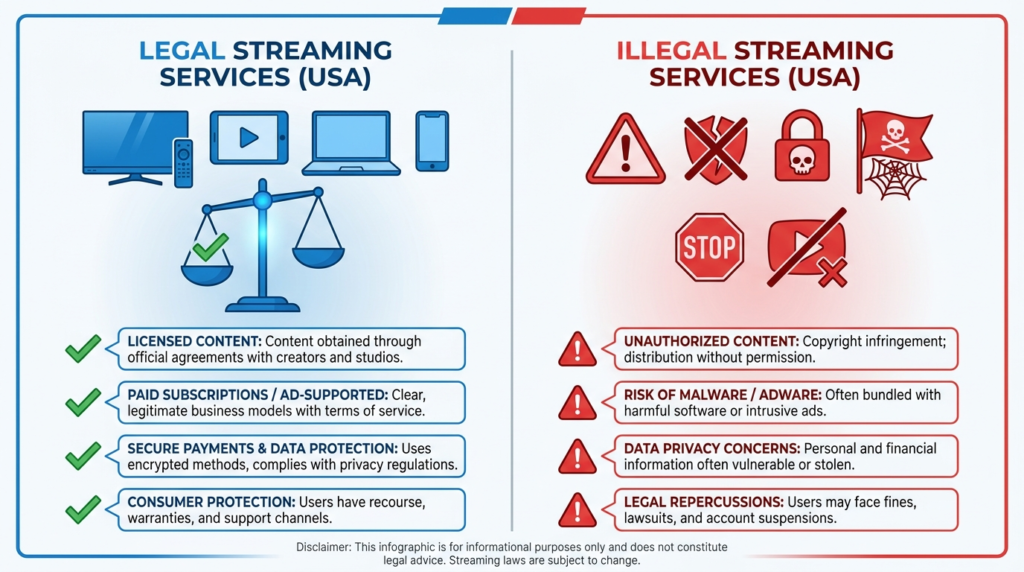
IPTV technology itself is legal in the USA, but unlicensed IPTV services that distribute copyrighted content without permission are illegal. This distinction is crucial to understanding the legal landscape surrounding IPTV in the United States.
IPTV, or Internet Protocol Television, refers to the delivery of television content over the internet rather than traditional cable or satellite. While the technology is legitimate, the legality hinges on whether the content streams are licensed. Licensed IPTV providers operate under legal agreements with content owners, while unlicensed IPTV services often offer unauthorized access to paid content, raising serious legal concerns.
Understanding what IPTV is helps clarify why legality depends on licensing. IPTV delivers live TV channels, video on demand (VOD), and sometimes catch-up TV through internet protocols such as M3U playlists or middleware platforms. The flexibility and convenience of IPTV have made it a popular method for accessing entertainment across devices. However, the challenge arises when service providers bypass content licensing fees, infringing copyrights.
Is IPTV illegal in the USA? The answer lies in the legal framework and licensing requirements. The US Copyright Act protects broadcasters and content creators by regulating who can legally distribute content. Licensed IPTV providers comply with these laws, while unauthorized services violate copyright protections. Recent legislation has also enhanced penalties for illegal streaming, categorizing some offenses as felony crimes, with significant fines and possible imprisonment as consequences. For further insight, you can review sources like this detailed legal overview from a university publication source.
Licensed IPTV services available in the USA offer a legal and reliable way to stream live TV and on-demand content. Examples include well-known platforms such as YouTube TV, Hulu Live, Sling TV, and fuboTV. These providers have secured rights to distribute major networks and channels, ensuring users access content safely and within the bounds of the law. Their offerings include clear programming via electronic program guides (EPG) and VOD libraries, accessible on multiple devices with user-friendly interfaces.
On the other hand, unauthorized IPTV services commonly operate outside legal frameworks. These services might offer hundreds of channels at suspiciously low prices, often including premium sports, movies, and series without proper rights. Users of such services risk poor streaming quality, service interruption, malware exposure, and legal penalties. The uncertainties around provider legitimacy make these options risky for consumers.
Many viewers wonder if watching IPTV is illegal for end users. In general, most prosecution efforts focus on unauthorized IPTV operators rather than individual consumers. However, knowingly subscribing to illegal IPTV can expose users to civil lawsuits and in some cases criminal penalties, especially where large-scale distribution is involved. The risk level varies, but consuming illegal streams still carries legal exposure.
Penalties for illegal IPTV use range from civil fines to criminal charges. Under recent federal provisions, repeated and commercial-scale copyright infringement via streaming can lead to felony charges with penalties including substantial fines and imprisonment. Additionally, civil lawsuits may seek damages for unauthorized content distribution. Awareness of these risks can guide consumers toward safer alternatives.
To ensure IPTV service legality, a verification checklist is invaluable. Start by confirming if the provider holds proper broadcasting licenses or agreements. Check for transparency about the service’s ownership, clear terms of service, and customer support. Licensed services often highlight affiliations with major content rights holders or display certifications. Avoid offers with extremely low rates or massive channel lineups that seem too good to be true. Reviews and regulatory compliance information can also aid due diligence. For more guidance on recognizing legal IPTV, consult this expert analysis here.
Legal alternatives to illegal IPTV abound, providing reliable and content-rich experiences. In addition to mainstream platforms, some premium IPTV services cater to niche interests with full licensing, transparent business models, and quality streaming. These legal options often include comprehensive channel packages, cloud DVR, and multi-device support without the risk of service shutdown or legal repercussions. Exploring such options supports the creators and distributors behind the content.
For further understanding of IPTV benefits and how to navigate legality concerns, the article “What Is TiVi IPTV and Its Benefits” offers helpful insights.
In summary, IPTV as a technology is not illegal in the USA, but unauthorized IPTV services infringing copyrights are unlawful and carry serious risks. Users should educate themselves on legal distinctions, verify service legitimacy, and opt for licensed providers to enjoy IPTV safely. For a comprehensive legal perspective on IPTV truths in the USA, see the detailed guide at IPTV Legal USA Truths.
Is IPTV illegal in all 50 states? Federal copyright laws apply nationwide, so legality issues are consistent across states. IPTV differs from streaming platforms like Netflix or YouTube TV that operate fully within legal frameworks; not all IPTV services are equal in licensing compliance.
To explore reputable IPTV service options and stay on the right side of the law, consider checking out the Best IPTV Provider page for a selection of legal and trusted IPTV subscriptions.
This approach ensures you enjoy the convenience of IPTV technology while supporting legal and sustainable content distribution.